Composite vs Wood Decking for Virginia Weather: An Honest Guide
Virginia is one of the harshest climates in the country for outdoor wood. Summer humidity above 70 percent, freeze-thaw winters, intense UV, weeks of late-summer rain that never seem to end. The wrong decking material will look tired in three years and need replacing in eight. After building decks across Fairfax, Loudoun, Henrico, and Richmond for over a decade, here is what we actually install.
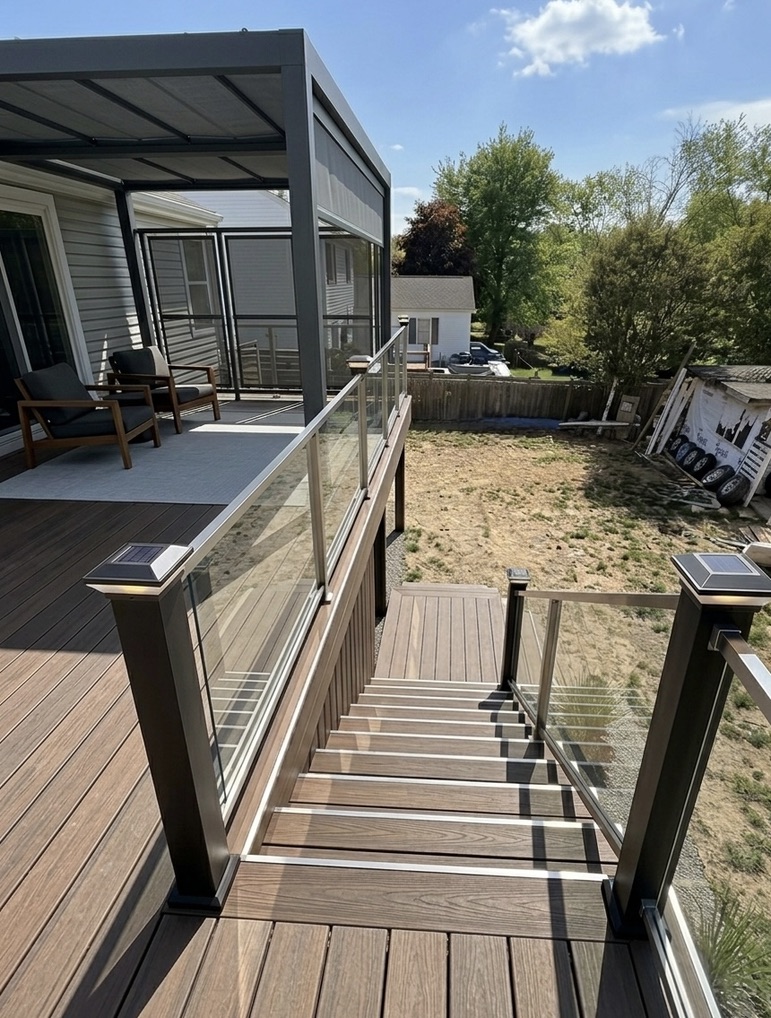
Composite decking (Trex, TimberTech, Fiberon) is what we recommend to roughly 80 percent of our Virginia clients. Modern composite is 95 percent reclaimed material wrapped in a synthetic cap that resists fading, staining, mold, and rot. Expected service life is 25 to 30 years with effectively zero maintenance. Upfront cost is 30 to 50 percent higher than pressure-treated lumber, but you never sand, you never stain, you never seal. You walk on it and you sit on it and you forget it is there.
Cedar is beautiful and naturally rot-resistant, but in Virginia it requires sealing every two to three years to maintain its appearance and structural life. Without consistent maintenance, expect twelve to fifteen years before significant degradation. With true ongoing care, twenty plus. Cedar is for the homeowner who genuinely enjoys the ritual of maintenance, or who has a service on retainer.
Ipe and other tropical hardwoods are the premium natural option. Density is so high that ipe sinks in water and resists insects without chemical treatment. Service life can exceed forty years. The trade-offs are real. Cost is two to three times cedar, installation requires predrilling every fastener, and the wood greys quickly without annual oiling. Stunning if you commit to it. Painful if you do not.
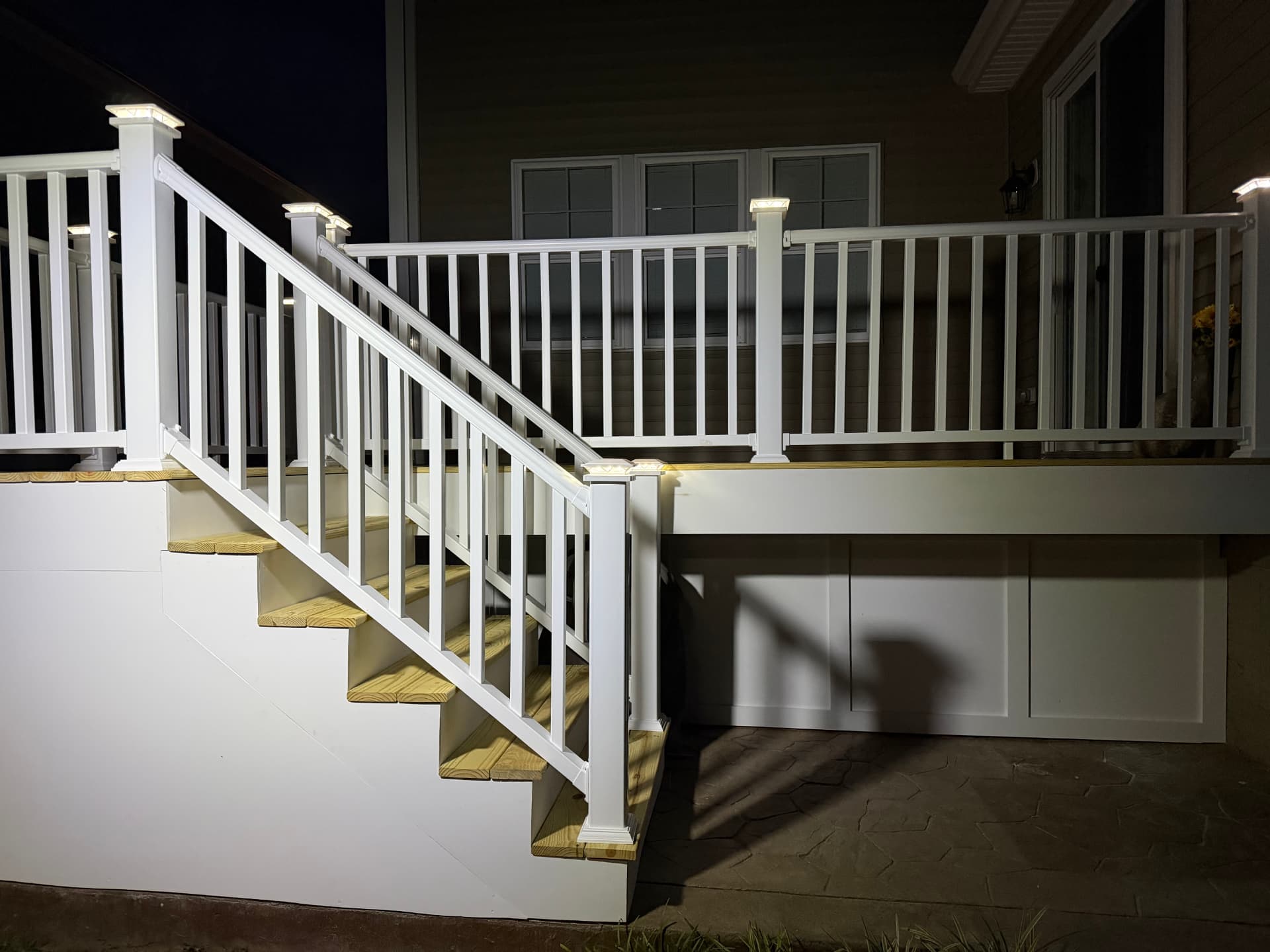
Pressure-treated pine is the budget option and the one we most often warn clients away from. Expect ten to fifteen years if maintained, less if not. We rarely recommend it for clients investing in a custom outdoor space because the savings are eaten by replacement costs inside fifteen years.
Beyond the boards, the substructure quietly determines everything. We use stainless or hot-dip galvanized hardware (not bright zinc), proper joist spacing for the climate, ground-contact-rated framing, and concealed fasteners on the deck surface. Skipping these details cuts deck life in half regardless of which decking you walk on.
Our recommendation for most homes between Richmond and Northern Virginia: Trex Transcend or TimberTech Advanced PVC over a stainless-hardware substructure, with low-voltage integrated lighting and aluminum or composite railings. Maintenance-free, weather-proof, and built to outlast the next two roofs.
If you are planning a deck build anywhere in the Richmond to Northern Virginia corridor, request a consultation. We will walk your yard, talk through materials and lighting, and give you a fixed quote you can plan your summer around.
Ready to Start Your Project?
Get a free consultation or try our remodel preview service.